
Alternatives to Ark
Explore the best alternatives and competitors to Ark.
Explore 20 alternatives to Ark. Compare features, pricing, and find the best fit for your needs.

BillionVerify
BillionVerify is a professional email verification service built to solve one problem: bad email data costs businesses money.


Memwyre
Memwyre is an AI memory platform that gives every AI tool, agent, and conversation a persistent, shared memory you can search and reuse.

layahost
Moderation, routing, intent and scoring for any text over one Jev-compatible API, hosted in the EU.


Happy Horse AI
Create videos from text, images, or references with Happy Horse AI, flexible outputs, and API workflows.

ContextBolt SEO
Research keywords, competitors, backlinks and AI visibility inside Claude or Codex, with findings saved to your SEO dashboard.
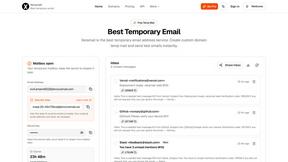
Xeramail Temp Mail
Free temp mail and temporary email from Xeramail — get a disposable email address instantly, no sign-up. Skip spam and use custom domains.

Shopeasy.ai
Shopeasy.ai is an AI-native Commerce OS unifying storefront, payments, logistics, and POS into one platform for modern merchants.


Lahjty
Write, design, and voice Arabic campaigns in the dialect your customers actually speak: copy, images, audio, and SEO articles from one brief.

Built2WinWeb AI SEO
Generate MCP servers, A2A agents, and llms.txt. Complete AI infrastructure for your website. Flat‑fee, hand‑coded PHP, full code ownership.

OmniaKey
One key to unlock every AI model, from language and reasoning to image, video, audio, and multimodal intelligence.



GPT Proto
Access Best AI models for chat, image, video, audio through one API. Pay-as-you-go pricing, up to 80% cheaper than direct providers.


Postqued
Schedule and publish social content across 10 platforms with one dashboard, API, and MCP built for teams and AI agents.


About Ark Alternatives
Ark is the revolutionary email API that lets your AI assistant whip up perfect email code on command, making it a game-changer for developers in the fast-paced tech landscape. Designed for builders who live in the world of AI coding, Ark transcends traditional email infrastructure with its native MCP server and 26 specialized tools. It’s all about efficiency and effectiveness, allowing you to ship features at lightning speed without the headaches of debugging or wrapper code. Users often seek alternatives to Ark for various reasons, such as pricing structures, additional features, or specific platform requirements. Whether it’s budget constraints or a need for more robust functionalities, developers are on the lookout for solutions that align with their unique project demands. When exploring alternatives, consider factors like ease of integration, reliability, documentation quality, and overall performance to find the perfect fit for your development needs.
FAQs about Ark Alternatives
What is Ark?
Ark is an AI-powered email API that enables developers to generate production-ready email code through natural language prompts.
Who is Ark for?
Ark is designed for developers who want to streamline their email integration process and ship features quickly using AI coding assistants.
Is Ark free?
Ark operates on a pay-per-email model, so users are charged based on their email usage rather than a flat fee.