Skene vs Tickari
Side-by-side comparison to help you choose the right AI tool.

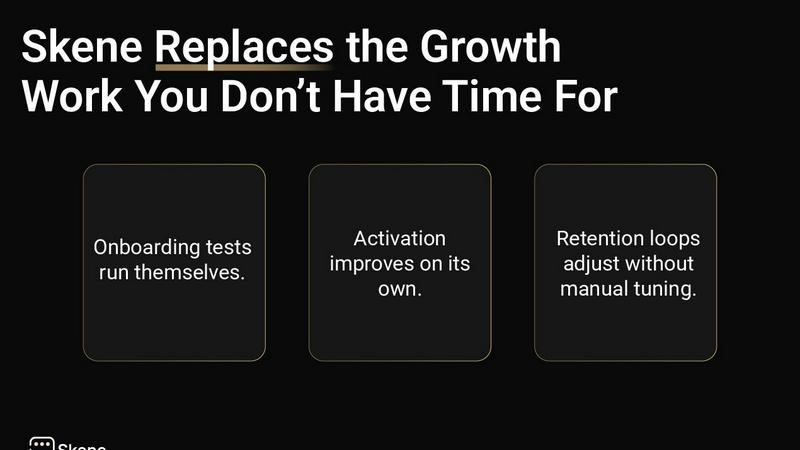
Skene transforms your codebase into an automated growth engine, driving onboarding and retention with seamless AI.
Last updated: February 26, 2026

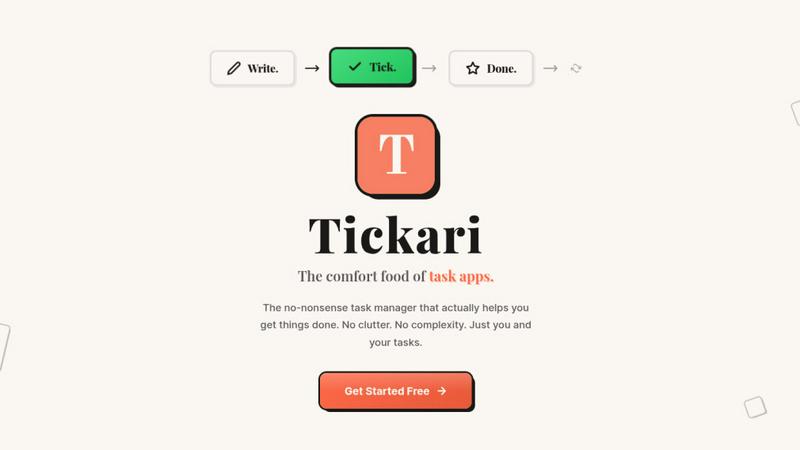
The no-nonsense task manager that actually helps you get things done. No clutter. No complexity. Just you and your tasks.
Visual Comparison
Skene
Tickari
Overview
About Skene
Skene is the ultimate game-changer for anyone tired of the clutter and chaos that comes with traditional growth tech. Imagine a fully automated, AI-powered Product-Led Growth (PLG) infrastructure that seamlessly integrates with your codebase and IDE. This isn't just another tool; it's your self-learning growth engine—your "growth team in a box." Designed specifically for indie developers, early-stage startups, and any product team that’s had enough of dashboard fatigue, Skene takes the reins on optimizing onboarding, activation, and retention. By deeply analyzing your customer code and observing real user actions, it identifies friction points and drop-off areas. But here’s where it gets wild: Skene doesn't just spot the issues; it automatically crafts, tests, and deploys enhanced user flows. The outcome? Your growth loops become self-sustaining, continually tightening and improving without you lifting a finger. It's time to ditch those clunky black-box scripts and reclaim control. With Skene, growth is pure code—code you own, version, and prompt. So stop managing widgets and start shipping unstoppable growth loops.
About Tickari
Tickari is a deliberately minimal, no-nonsense task manager designed for people who are tired of overcomplicated productivity tools and just want to get things done. Instead of overwhelming you with features like complex boards, AI-generated suggestions, or endless customization, Tickari focuses on a simple, frictionless workflow: write a task, tick it off, and move on.
The product embraces a “less but better” philosophy—eliminating clutter, reducing cognitive overhead, and removing the need for onboarding tutorials or setup processes. There are no distractions, no unnecessary decisions, and no feature bloat—just a clean interface that works instantly the moment you open it. This makes it particularly effective for users who feel stuck organizing tasks instead of actually completing them.