ClearDemand vs Tickari
Side-by-side comparison to help you choose the right AI tool.

ClearDemand
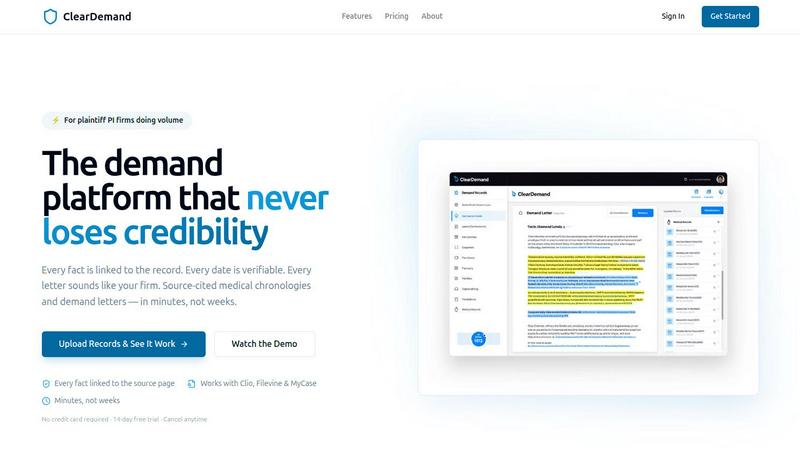
ClearDemand delivers source-verified demand letters in minutes, ensuring credibility and precision for PI attorneys.
Last updated: February 28, 2026

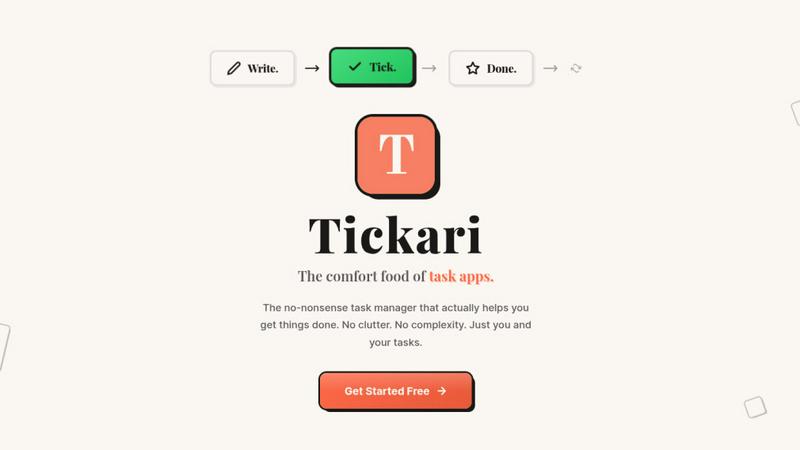
The no-nonsense task manager that actually helps you get things done. No clutter. No complexity. Just you and your tasks.
Visual Comparison
ClearDemand
Tickari
Overview
About ClearDemand
Welcome to the future of personal injury law with ClearDemand, the revolutionary AI platform designed specifically for plaintiff law firms. This powerhouse tool crafts source-verified demand letters that resonate with your firm’s unique voice, making each document not just a letter, but a persuasive argument grounded in solid evidence. It’s not just about speed; it’s about credibility. ClearDemand equips firms with advanced features like medical record OCR, case companion AI, and a suite of litigation documents, so you can draft faster while maintaining integrity. With cross-case search capabilities, you can easily navigate through demand letters, medical records, and evidence, ensuring every detail is at your fingertips. Embrace efficiency and elevate your practice with a 14-day free trial – no credit card required; cancel anytime.
About Tickari
Tickari is a deliberately minimal, no-nonsense task manager designed for people who are tired of overcomplicated productivity tools and just want to get things done. Instead of overwhelming you with features like complex boards, AI-generated suggestions, or endless customization, Tickari focuses on a simple, frictionless workflow: write a task, tick it off, and move on.
The product embraces a “less but better” philosophy—eliminating clutter, reducing cognitive overhead, and removing the need for onboarding tutorials or setup processes. There are no distractions, no unnecessary decisions, and no feature bloat—just a clean interface that works instantly the moment you open it. This makes it particularly effective for users who feel stuck organizing tasks instead of actually completing them.