Blueberry vs qtrl.ai
Side-by-side comparison to help you choose the right AI tool.

Blueberry
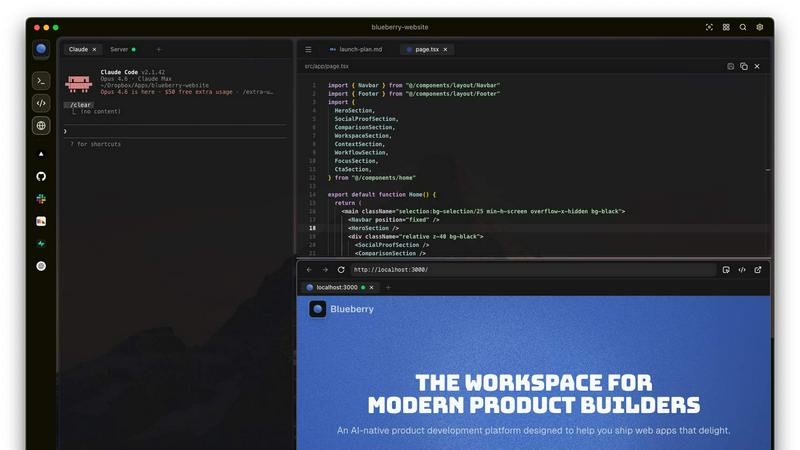
Blueberry unites your editor, terminal, and browser into one seamless workspace for effortless web app development.
Last updated: February 28, 2026

qtrl.ai
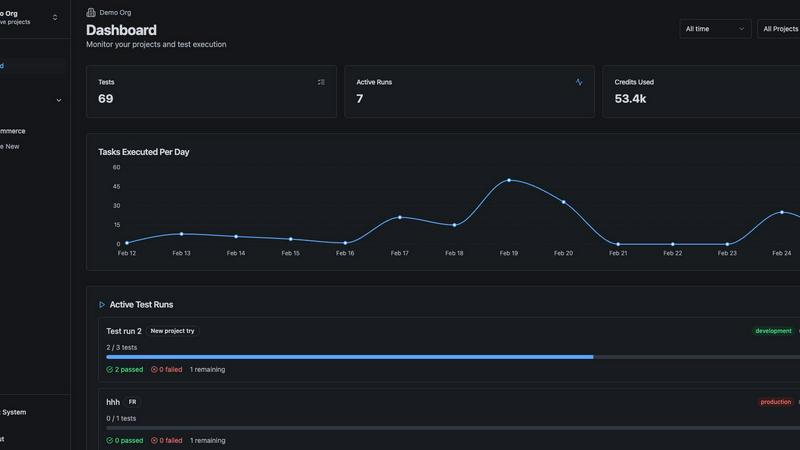
qtrl.ai scales your QA with autonomous AI agents that you actually control.
Last updated: March 4, 2026
Visual Comparison
Blueberry
qtrl.ai
Feature Comparison
Blueberry
Unified Workspace
Blueberry combines a terminal, code editor, and preview browser into a single workspace, allowing you to build and ship without the hassle of switching between multiple applications. This integrated approach fosters a seamless development experience, enabling you to focus on what matters most—your code.
AI-Powered Context
With Blueberry's built-in MCP, your chosen AI model can see your entire workspace. This means it can leverage real-time context from your editor, terminal output, and browser to offer precise assistance, making your coding sessions more productive and less chaotic.
Multi-Device Preview
Preview your web apps on desktop, tablet, and mobile devices all within Blueberry. This feature ensures you can see exactly what your users will experience, without having to leave your workspace. It’s like having a personal QA team right at your fingertips.
Pinned Apps Integration
Keep essential tools like GitHub, Linear, Figma, and PostHog docked within your Blueberry workspace. These pinned apps load alongside your project and share live context with your AI, allowing for a more cohesive workflow that keeps everything you need in one place.
qtrl.ai
Autonomous QA Agents
These aren't your average, flaky bots. qtrl's AI agents are next-level operatives that execute your instructions on-demand or continuously, scaling across real browsers and environments. They operate within your rules, making autonomous decisions you can actually trust—no mysterious black-box voodoo. Real execution, real results, zero simulations.
Enterprise-Grade Test Management
Get your QA house in order with a centralized, no-BS foundation. Manage test cases, plans, and runs in one slick platform. Enjoy full traceability from requirement to release, built-in audit trails for compliance nerds, and seamless workflows that blend manual and automated testing. It's the governance powerhouse your security team will actually love.
Progressive Automation
Ditch the all-or-nothing pressure. Start by writing high-level instructions for humans or AI to follow. Then, smoothly transition to letting qtrl generate and suggest tests based on your coverage gaps. Every step is reviewable and refinable—you call the shots on when to increase the automation dosage. It's QA evolution, not revolution.
Adaptive Memory & Multi-Env Execution
qtrl gets smarter every day, building a living knowledge base of your app from every test run and exploration. This context-aware brain powers sharper test generation. Plus, execute everywhere—dev, staging, prod—with per-environment variables and encrypted secrets that are never exposed to the AI, keeping your configs locked down and consistent.
Use Cases
Blueberry
Streamlined Development
Developers can use Blueberry to streamline their coding process by accessing everything they need from one place. With integrated tools and AI assistance, you can focus more on writing high-quality code rather than managing multiple applications.
Collaborative Projects
For teams working collaboratively, Blueberry serves as a centralized hub where all project members can access the same tools. This unified workspace fosters better communication and coordination, enhancing overall productivity.
Rapid Prototyping
Blueberry is perfect for designers and developers who need to quickly prototype web applications. The ability to see live changes in real-time while coding allows for rapid iterations and faster feedback loops.
Learning and Experimentation
New developers and students can greatly benefit from Blueberry’s integrated environment, where they can learn coding in a practical setting. Having AI context helps them understand the code better and resolve issues more efficiently as they learn.
qtrl.ai
Scaling Beyond Manual Testing Hell
For QA teams drowning in repetitive click-throughs. qtrl provides the escape hatch, letting you structure manual tests first, then progressively introduce AI automation to handle the boring stuff. Scale your coverage and free your team to focus on complex, high-value testing scenarios without hiring an army.
Modernizing Legacy QA Workflows
Stuck with clunky, outdated tools and scripts that break if you look at them wrong? qtrl is your modernization path. It integrates with your existing stack and CI/CD pipelines, replacing fragile automation with intelligent, self-healing agents and bringing siloed testing into a single source of truth.
Governing Enterprise AI Testing
For large organizations where "move fast and break things" is a compliance nightmare. qtrl delivers enterprise-ready AI with permissioned autonomy, full visibility into every agent action, and ironclad audit trails. You get the speed of automation with the governance and security your legal and security teams demand.
Empowering Product-Led Engineering Teams
Squads that own their quality need tools that don't suck. qtrl fits perfectly, enabling developers and product managers to write tests in plain English, see quality metrics in real-time, and ship features faster with confidence. It's the QA sidekick that integrates into your workflow, not disrupts it.
Overview
About Blueberry
Blueberry is your ultimate macOS companion, redefining the way modern product builders create web applications. Gone are the days of chaotic window juggling; Blueberry merges your editor, terminal, and browser into one streamlined workspace. It's designed for developers, designers, and innovators who crave efficiency and focus. By connecting with AI models like Claude, Codex, or Gemini through Blueberry's cutting-edge MCP, you can have your files, terminal outputs, and live previews all visible in one place. This integration not only eliminates the tedious task of copy-pasting context but also enhances your coding experience. With a sleek interface that empowers you to build, test, and ship delightful web apps, Blueberry is the go-to tool for anyone looking to elevate their product development process. And the best part? It's currently in beta and completely free, making it accessible to everyone eager to innovate and create.
About qtrl.ai
Tired of choosing between QA chaos and brittle, soul-crushing automation? qtrl.ai is the game-changer. It's the modern QA platform that finally bridges the gap, giving software teams the power to scale their quality assurance without losing their minds or their governance. Think of it as your centralized command center for all things testing: a slick hub to organize test cases, plan runs, trace requirements, and get real-time visibility into what's actually passing and where the gnarly risks are hiding. But here's the kicker—qtrl doesn't force you into a sketchy, black-box AI future. Instead, it layers on intelligent automation like a pro. Start with rock-solid manual test management, then level up when you're ready. Unleash autonomous AI agents that can spin up UI tests from plain English, keep them from breaking as your app evolves, and run them everywhere. Built for product-led squads, QA teams breaking free from manual hell, companies ditching legacy baggage, and enterprises that need airtight audit trails. qtrl's mission is simple: obliterate the trade-off between control and speed, delivering trustworthy, intelligent QA that actually scales with you.
Frequently Asked Questions
Blueberry FAQ
What operating system does Blueberry support?
Blueberry is currently available exclusively for macOS, optimized to deliver the best experience on Apple devices.
Is Blueberry really free during the beta phase?
Yes, Blueberry is 100% free during its beta phase. Users can download and use the app without any charges, making it accessible for everyone eager to enhance their development process.
Can I use my favorite AI models with Blueberry?
Absolutely! Blueberry allows you to connect with various AI models like Claude, Gemini, or Codex through its built-in MCP, giving you the flexibility to choose the AI that best suits your needs.
How does Blueberry enhance collaborative workflows?
Blueberry enhances collaborative workflows by allowing multiple team members to work within the same unified workspace. Pinned apps and shared live context ensure that everyone stays on the same page, boosting productivity and teamwork.
qtrl.ai FAQ
Is qtrl.ai just another "AI-washing" hype tool?
Absolutely not. qtrl is built on a foundation of serious test management first. The AI is a powerful, progressive layer you control. It suggests and generates tests you can review, executes within strict boundaries, and earns its autonomy by proving value—not by making unpredictable, black-box decisions. Trust is built, not assumed.
How does qtrl handle security and secrets?
With extreme prejudice. Secrets and environment variables are encrypted and never exposed to the AI agents. You get multi-environment execution with configs locked down per project. We're built for enterprises, meaning security, compliance, and data isolation aren't afterthoughts—they're the blueprint.
Can I really start with manual testing and add AI later?
100%. That's the whole vibe. Start by using qtrl as a powerful test management hub. When your team is ready, flip the switch on automation features. Let the AI agents generate tests from your instructions, suggest coverage gaps, and handle execution. You control the pace of your QA evolution.
What if the AI-generated tests are wrong or break?
You're always in the driver's seat. Every AI-generated test is fully reviewable and editable before it hits your suite. Combined with Adaptive Memory, the system learns from corrections and application changes, constantly improving its accuracy. It's a collaborative tool, not a replacement for your team's expertise.
Alternatives
Blueberry Alternatives
Blueberry is the ultimate tool for modern product builders, combining your editor, terminal, and browser into one slick workspace designed specifically for web app development. As developers and designers dive into their projects, they often find themselves tangled in the chaos of switching between apps, which can stifle creativity and slow down productivity. This is where the search for alternatives comes in. Users commonly look for other solutions due to factors like pricing, specific feature sets, or compatibility with their preferred platforms. When considering an alternative to Blueberry, it's crucial to evaluate the integration capabilities of the workspace, how well it supports your development workflow, and whether it provides the tools you need for a smooth coding experience. A solid alternative should enhance your productivity and keep your creative flames burning bright, without the hassle of jumping through hoops to connect different applications.
qtrl.ai Alternatives
So you're scoping out the scene beyond qtrl.ai. Smart move. qtrl is a next-gen player in the QA automation and dev tools space, built for teams who want to inject AI into their testing without losing their minds—or their governance. It’s that slick platform promising to bridge the brutal gap between slow manual checks and flaky automated scripts. People hunt for alternatives for all the usual reasons. Maybe the price tag doesn’t vibe with the startup budget, or the feature set feels like overkill for a lean squad. Sometimes it’s about platform fit—needing deeper CI/CD hooks, a different flavor of reporting, or an ecosystem that plays nicer with an existing tech stack. The quest is real. When you're weighing your options, cut through the hype. Look for something that matches your team's actual hustle. Do you need iron-clad audit trails, or just to automate the boring stuff? Is the AI assist actually trustworthy, or a black-box nightmare? Prioritize control, clarity, and a path that scales with you, not against you.